Best Leaching Equipment for Gold & Silver Ore: Price & Process Guide 2025
更新时间:2026-05-23
Hey there, fellow miners and plant operators! If you're into gold and silver recovery, you already know that leaching is where the real money is made. But let's be honest: choosing the right leaching equipment can be a headache. Not all equipment is equal, and a bad choice can eat into your profits fast.
This guide is written specifically for you—mine owners, purchasing managers, and entry-level technicians. We’ll keep it simple, practical, and full of real-world "dirty" details. No fancy textbook jargon here, just what works on the ground.
Let’s dive into the best leaching equipment for gold and silver ore in 2025—covering prices, processes, and everything in between.
Leaching is basically washing the gold or silver out of the rock using a chemical solution (usually cyanide, but sometimes also thiourea or chlorine). The equipment used for this job is called a leaching system. It comes in different shapes and sizes, from simple agitation leaching tanks for fine ore, to heap leaching pads for large, low-grade ore piles.
For gold and silver ore, the most common setups are:
Carbon-in-Leach (CIL) Tanks and Carbon-in-Pulp (CIP) Tanks: Perfect for fine grinding. High recovery.Recommended Supplier: [Jiangxi Hengchang Mining Machinery] offers complete leaching lines with custom tank sizes. They're built tough for African, South American, and Southeast Asian mines.
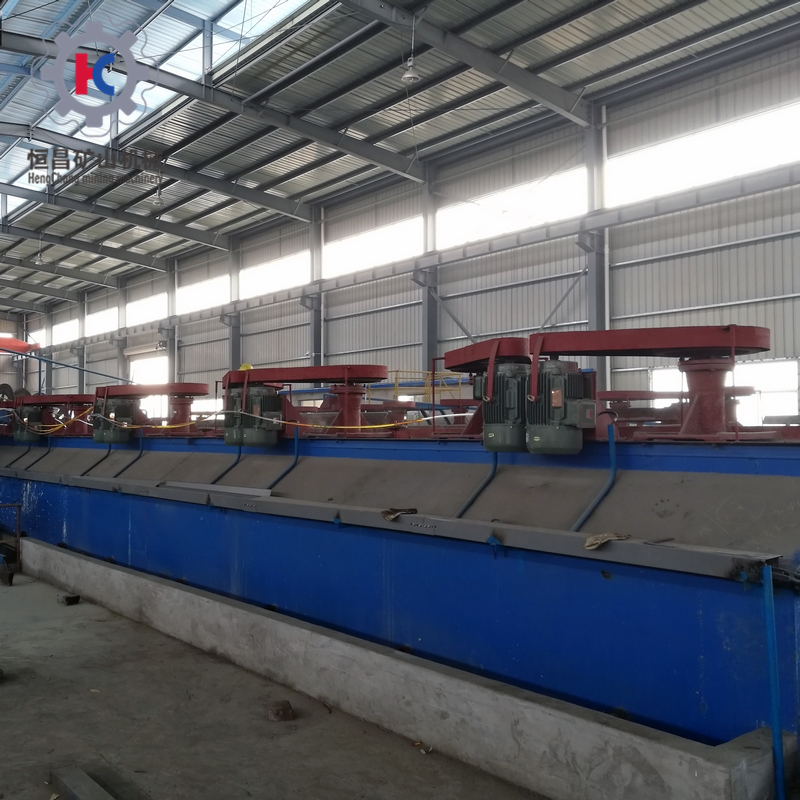
Imagine a giant cylindrical tank, filled with a rotating mixer, slurry (ground ore + water), and chemicals. That's your agitation leaching unit.
The step-by-step process:
Pre-treatment: Ore is crushed and ground to powder (usually 200 mesh or finer). This exposes gold particles.4Au + 8NaCN + O2 + 2H2O → 4NaAu(CN)2 + 4NaOH.Industrial Parameters:
Residence time: 24–72 hours (depends on ore type)When you're buying equipment, look for these hardware features that make your life easier:
| Component | Feature | Why It Matters |
|---|---|---|
| Tank Body | Wear-resistant steel (Q345R) or rubber-lined | Handles corrosion from cyanide & slurry erosion. Prices: $3,000 – $15,000 per unit. |
| Agitator | Double-layer impeller (turbine style) | Prevents "dead zones" (unleached material at the bottom). |
| Motor & Gearbox | Variable frequency drive (VFD) | Adjustable speed. Reduces power consumption by 15–20% vs fixed-speed. |
| Air Pipe | Always include aeration ring | Delivers oxygen for gold dissolution. Higher oxygen = faster leach. |
| Carbon Screens (CIL) | Stainless steel mesh (0.5–1.0mm slots) | Keeps carbon inside the tank while slurry overflows. |
Pro tip: Many cheap tanks have thin steel walls. Go for at least 8mm–10mm wall thickness if you're running 24/7. [Jiangxi Hengchang] uses 10mm on all their 5-ton and 10-ton tanks as standard.
Leaching equipment works best on certain ore types. Here's your cheat sheet:
Highly Suitable ✅:
Oxidized gold ore: Free-milling, no sulfides. Recovery 92–96%.Less Suitable ⚠️:
Refractory gold ore: Sulfide-hosted gold (e.g., pyrite, arsenopyrite). Needs pre-treatment (roasting, bacterial leaching).Real Example: In Tanzania, a plant processing oxide gold ore (0.8 g/t grade) used a 12-tank CIL line from [Jiangxi Hengchang], achieving 93% recovery. Their monthly profit jumped by 25% after switching from older tanks with poor aeration.
Here's a practical sizing chart for typical agitation leaching tanks (based on Jiangxi Hengchang's standard models):
| Model | Tank Volume (m³) | Slurry Capacity (tons/day) | Motor Power (kW) | Price Range (USD) |
|---|---|---|---|---|
| HL-1000 | 10 | 80–120 | 11 | $5,000 – $8,000 |
| HL-1500 | 15 | 120–180 | 15 | $8,000 – $12,000 |
| HL-2000 | 20 | 180–250 | 22 | $12,000 – $18,000 |
| HL-3000 | 30 | 250–400 | 30 | $18,000 – $25,000 |
Notes:
These are per single tank. A full CIL circuit might have 6–10 tanks in series.This is where most operators fail. Let's keep it simple:
Daily Care (5-minute checks):
Check cyanide concentration in the tank (use titration paper). Target: 0.1–0.3 g/L.Weekly Maintenance:
Clean carbon screens (CIL tanks) to prevent clogging.Critical Warning: Never let gold-loaded carbon sit stagnant in the tank for more than 12 hours without mixing. It can "poison" the carbon (adsorb other metals) and reduce payability.
Choosing between leaching methods? Here's the quick comparison:
| Feature | Agitation Leaching (CIL/CIP) | Heap Leaching | Vat Leaching |
|---|---|---|---|
| Ore grade | Medium–High (>1 g/t) | Low (<1 g/t) | Medium |
| Grinding needed | Yes, fine grind (200 mesh) | No, only crush (10–20mm) | Yes, crush (5–10mm) |
| Recovery rate | 90–96% | 60–80% | 80–90% |
| Investment cost | High ($300k–$2M for plant) | Low ($100k–$500k for pad) | Moderate |
| Water usage | High (slurry) | Low (drip irrigation) | Medium |
| Best for | High-grade gold/silver ore | Large tonnage, low-grade | Small operations |
Verdict: If you have >1.0 g/t gold and want the highest recovery, agitation leaching (CIL/CIP) wins. If you're on a tight budget with huge volumes of 0.5 g/t ore, go heap leaching.
Scenario 1: Small-Scale Gold Mine (5–10 tons/day)
Setup: 2–4 agitation tanks (HL-1000) + carbon columns.Scenario 2: Mid-Size Oxide Gold Plant (100–300 tons/day)
Setup: 6–10 CIL tanks (15m³ each) + electrowinning.Scenario 3: Silver-Dominant Ore (silver > gold)
Setup: Agitation leaching with higher cyanide dosage (up to 2 kg/t). Silver dissolves slower than gold.Here's what you need to remember:
Leaching equipment is a long-term investment – Buy quality tanks (thicker steel, good aeration) from a trusted supplier like [Jiangxi Hengchang Mining Machinery].Need a custom quote? [Jiangxi Hengchang] offers free technical consulting and a 1-year warranty on all leaching tanks. Just share your ore analysis (grade, particle size, sulfide content), and they'll design the right circuit for you.
For 2025, the winning formula is simple:
Good ore + Correct leaching equipment + Proper maintenance = High recovery & Profit.
Good luck out there, and may your gold room be full! ?




 English